


What Is HD Printing and Why Does It Matter for Wristbands?
HD printing — short for high-definition printing — is a digital inkjet process capable of laying down ink at resolutions of 1200 dpi or higher. At that density, the individual droplets become invisible to the naked eye, and what you perceive is a continuous, photographic image rather than a pattern of dots. For wristbands, this has practical consequences that go far beyond aesthetics.
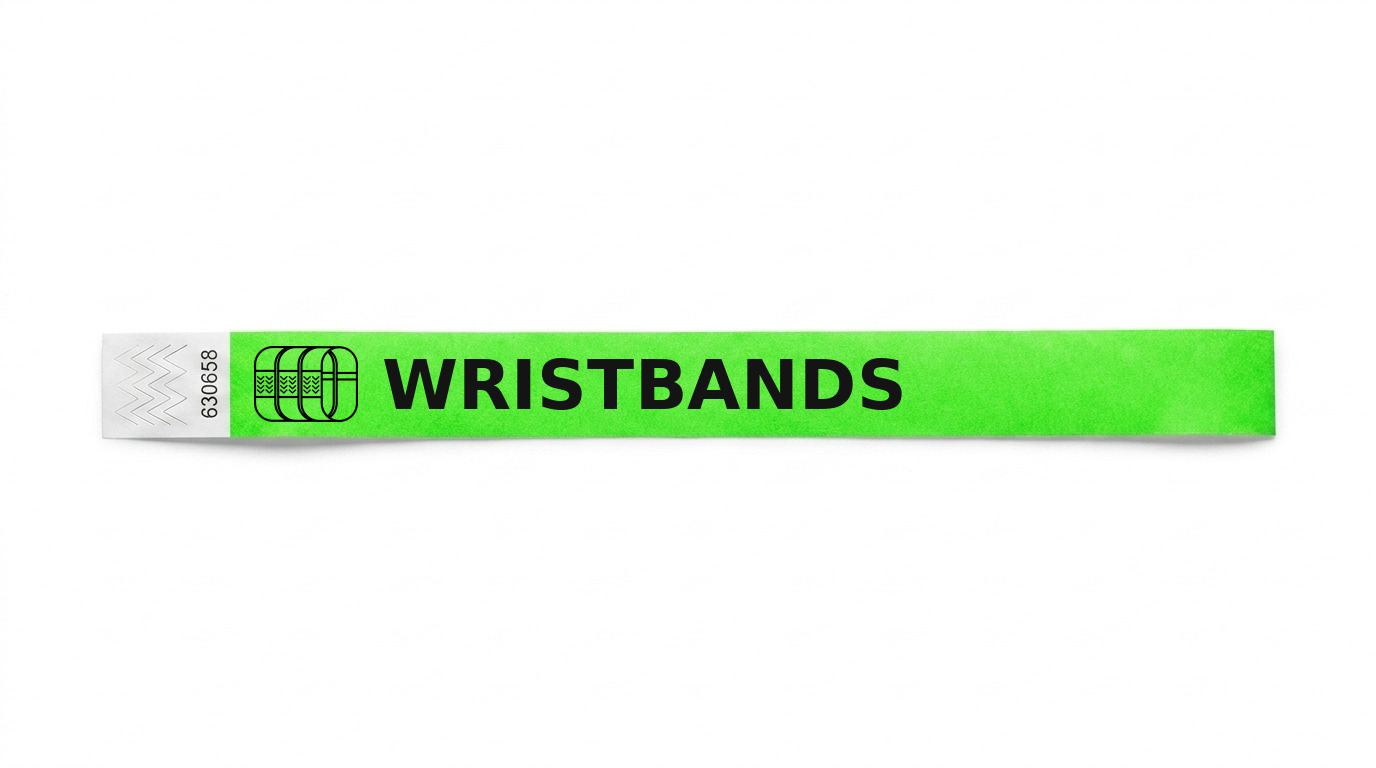
Consider a standard event wristband roughly 25 mm wide. At low resolution, a company logo reproduced at that size looks pixelated, text below 8 pt becomes illegible, and barcode bars may bleed into each other, causing scanner failures. At HD resolution, the same wristband can carry a crisp logo, a readable 6-digit sequential number, a scannable EAN-13 barcode, and a detailed background pattern — simultaneously, without any element compromising another.
Full-colour HD print is achieved through a CMYK (cyan, magenta, yellow, black) process that blends millions of colour combinations. This means there is no upcharge for using three colours versus ten. A wristband featuring a photographic sunset gradient costs the same to print as a single-colour design. For event organisers accustomed to paying spot-colour premiums, this is a fundamental shift in how wristband design budgets work.
Supported Substrates: Tyvek and Vinyl PVC
HD printing does not perform equally on every material. The substrate must be able to receive and hold ink without bleeding, and it must maintain dimensional stability so that the printed artwork remains in register across the full length of the band. Two materials have proven ideal: Tyvek and vinyl (PVC).
Tyvek Wristbands with HD Print
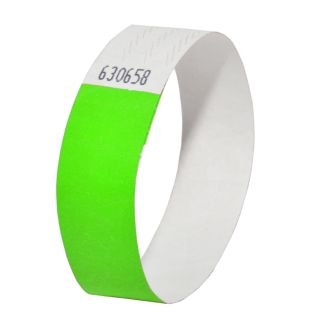
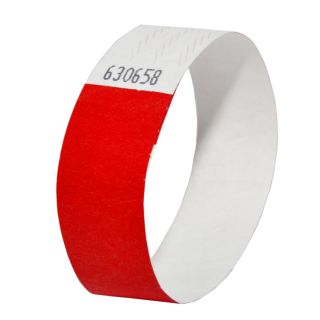
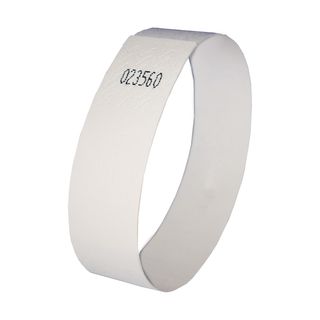
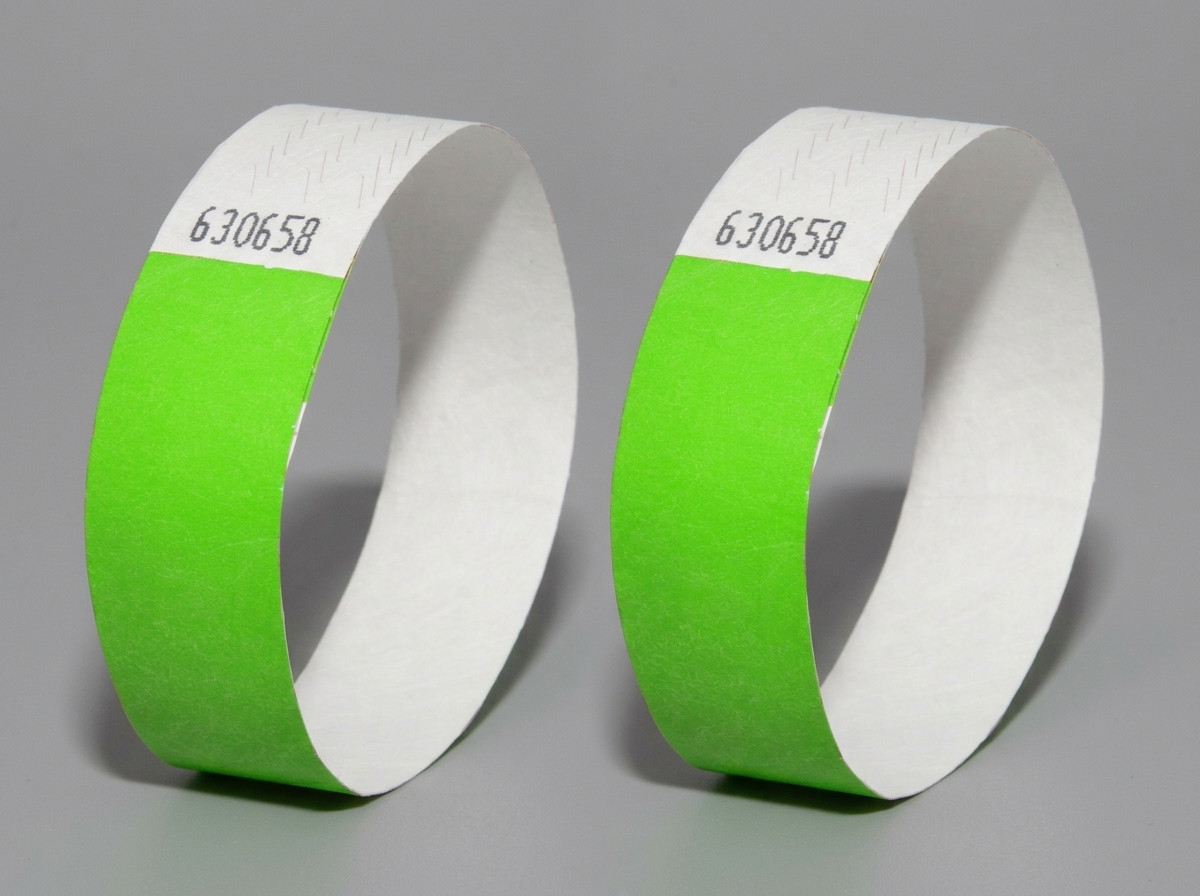
Tyvek is a high-density polyethylene fibre sheet manufactured by DuPont. Its surface is smooth enough to accept fine ink deposition, yet its fibrous inner structure gives it exceptional tear resistance — you need scissors or a blade to cut it, which is precisely the property that makes it a reliable one-time-use wristband. Key HD printing advantages on Tyvek include:
- Vibrant colour saturation: the white base of Tyvek acts like a photographic paper, making colours pop without a primer coat.
- Fine line reproduction: barcodes, QR codes, and micro-text remain sharp even on narrow 19 mm bands.
- Same-day production: because Tyvek prints and dries rapidly, an order placed in the morning can leave the production facility the very same day — a capability that has rescued more than a few organisers who discovered a wristband shortage 24 hours before gates opened.
- Cost efficiency at scale: Tyvek is the most economical substrate for large-volume events, making HD print accessible for festivals with tens of thousands of attendees.
Vinyl (PVC) Wristbands with HD Print
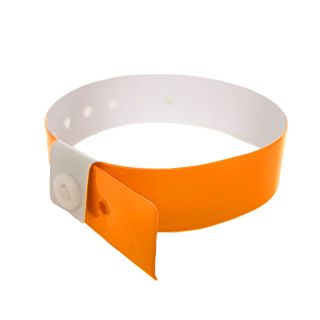
Vinyl wristbands are the premium tier. A PVC band is durable enough to withstand days of exposure to sun, sweat, chlorinated pool water, and repeated wrist flexion without the print fading or the band deforming. HD printing on vinyl typically uses inks formulated specifically for synthetic substrates, ensuring adhesion that ordinary inkjet inks cannot match.
Vinyl wristbands are the first choice for:
- Multi-day festivals where guests wear the same band for 3–5 days.
- Waterparks and aquatic events where the band will be submerged.
- VIP or premium access tiers where the band itself signals status.
- Hotel resorts offering all-inclusive packages, where the wristband replaces a room key or meal voucher.
The anti-transfer snap closure on vinyl wristbands means that once sealed, the band cannot be transferred to another person without visible damage — a security feature that pairs perfectly with the HD-printed artwork and unique sequential numbering we apply at no extra cost.
Design Elements That Benefit Most from HD Printing
HD printing elevates every part of a wristband design, but certain elements benefit disproportionately from the higher resolution and full-colour palette.
Logos and Brand Marks
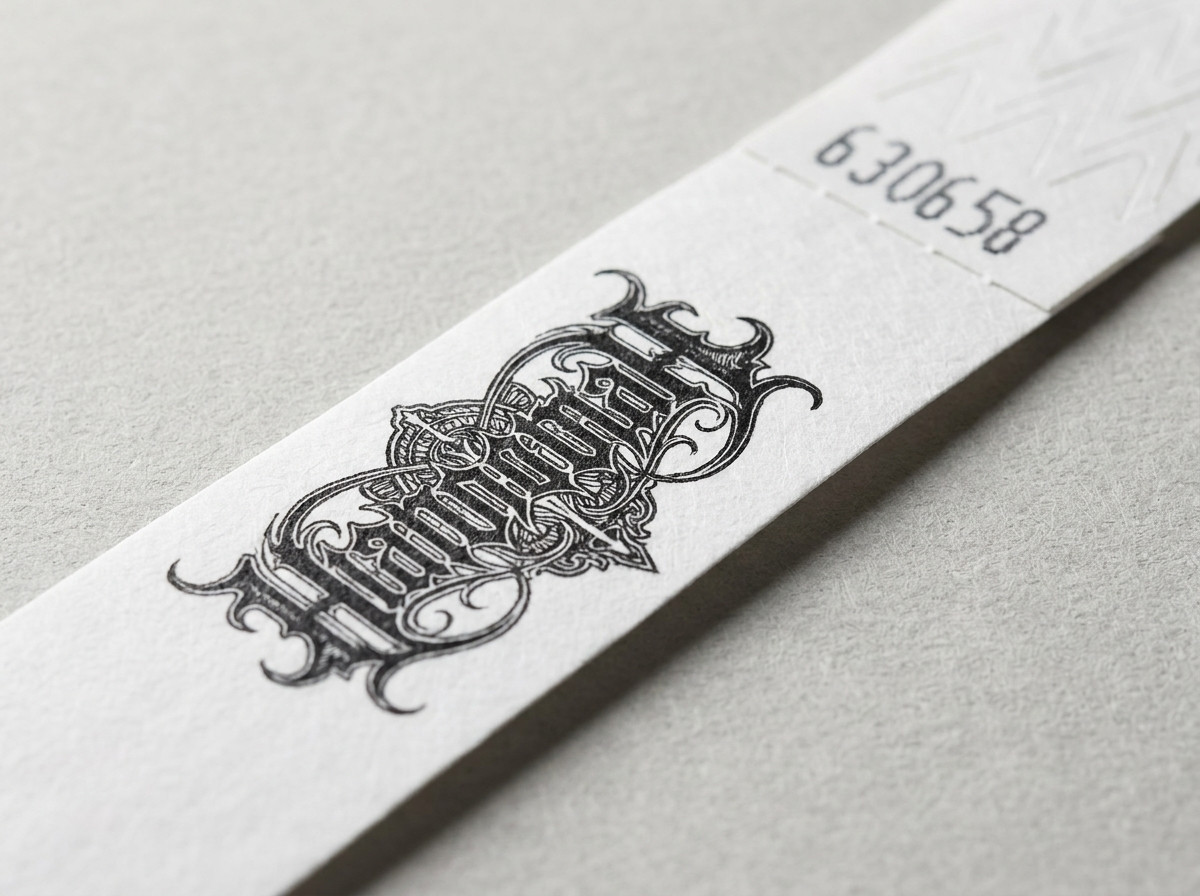
Corporate logos often contain fine lines, small text, and precise colour matching. A sponsor's brand standards may specify an exact Pantone shade. While digital CMYK printing cannot perfectly reproduce every Pantone colour, HD print gets closer than any other wristband printing technology available at scale, and the difference is imperceptible to most attendees. More importantly, the sharpness of a logo at wristband scale — roughly 20–30 mm wide — depends entirely on resolution. At HD quality, a logo with hairline strokes at 0.5 pt remains crisp and recognisable.
Sequential Numbering and Variable Data
Every wristband in a run can carry a unique sequential number — 000001, 000002, and so on — or even personalised variable data such as a ticket tier code. HD digital printing is inherently a variable-data technology: the printer simply reads the next value from a database and prints it without stopping the line. This capability is what distinguishes digital HD printing from older screen or flexographic methods, where variable data required a separate label or stamp.
Barcodes and QR Codes
A barcode that does not scan is worse than no barcode at all: it slows entry queues and frustrates staff. HD printing produces barcode bars with perfectly vertical edges and consistent ink density across the entire wristband run. QR codes printed at HD resolution can be as small as 12 × 12 mm and still scan reliably with a standard smartphone camera or handheld scanner. If your event uses electronic ticket validation or cashless payment systems, the quality of the printed QR code is mission-critical, and HD is the only printing method that guarantees consistent scan rates at that size.
Background Patterns and Security Graphics
Fine guilloché patterns — the intricate line-work used on banknotes — are now achievable on wristbands thanks to HD print resolution. A background pattern of interlocking curves at 0.3 mm line width makes duplication by a standard home printer essentially impossible. When combined with sequential numbering and an anti-transfer closure, HD-printed security graphics create a three-layer authentication system that works without any electronic component.
Practical Workflow: From Artwork to Wristband
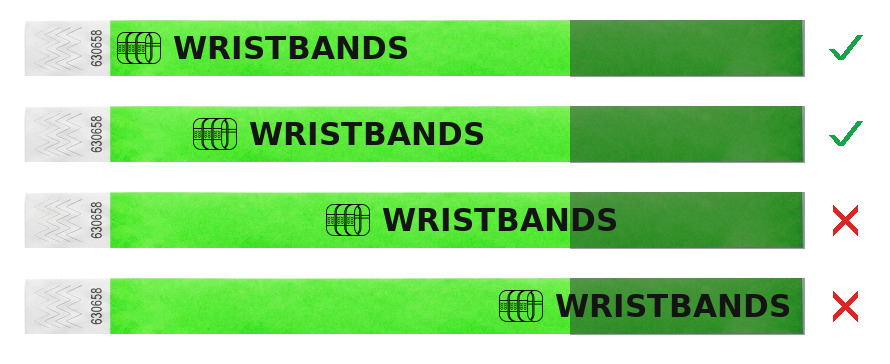
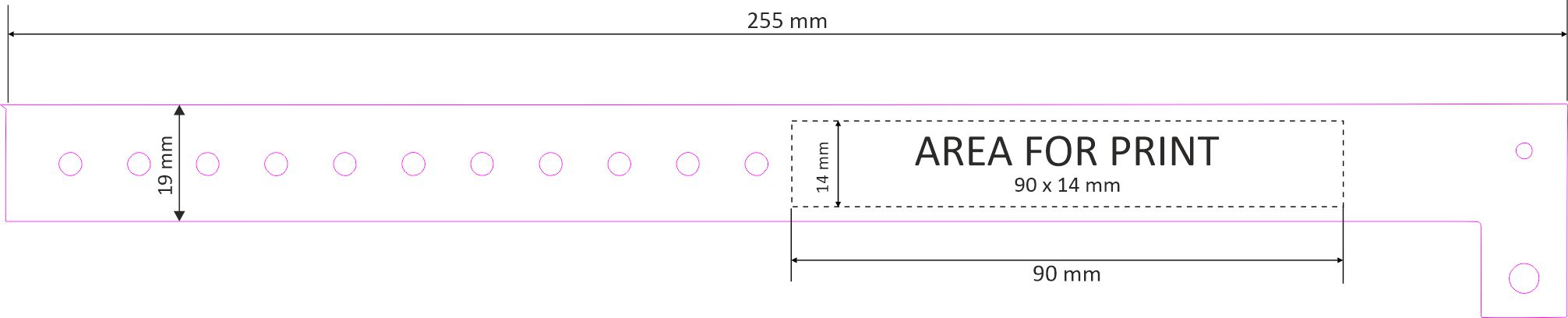
One of the most common barriers to high-quality wristband printing is the artwork preparation step. Many event organisers have a logo in a low-resolution JPEG, a rough sketch on paper, or simply a description of what they want. Professional print-ready artwork requires vector files at the correct dimensions, with bleeds, safe zones, and colour profiles set up correctly — knowledge that most event teams simply do not have on hand.
This is why we include free graphic design with every order. A customer tells us what they want — the event name, the colours, whether they need a barcode, how many tiers of access — and our design team creates the print-ready artwork at no extra charge. The file goes directly to our HD production line, which we operate in-house for both Tyvek and vinyl wristbands. There is no third-party printer, no markup on design, and no revision fee for reasonable changes.
The in-house production model also enables a turnaround that would be impossible through a broker: Tyvek orders can be produced and dispatched the same day they are placed. Vinyl orders typically follow within one business day. Both ship via DHL Express and FedEx Express, meaning that even a last-minute order placed late in the afternoon can reach a European destination the following morning.
This capacity has repeatedly turned potential event disasters into non-events. Organisers who discovered — sometimes 48 hours before gates opened — that their previous supplier had failed to deliver, or that they had simply forgotten to order wristbands, have received fully printed, branded, security-numbered wristbands in time. Same-day production combined with express international courier networks is not a marketing claim; it is an operational reality that we have demonstrated hundreds of times.
Choosing the Right HD Printing Specification for Your Event
HD printing is not one-size-fits-all. The optimal specification depends on the duration of your event, its environment, and the security level you need. Use the following guidance to make an informed choice.
Short Single-Day Events (Fairs, Concerts, Daytime Festivals)
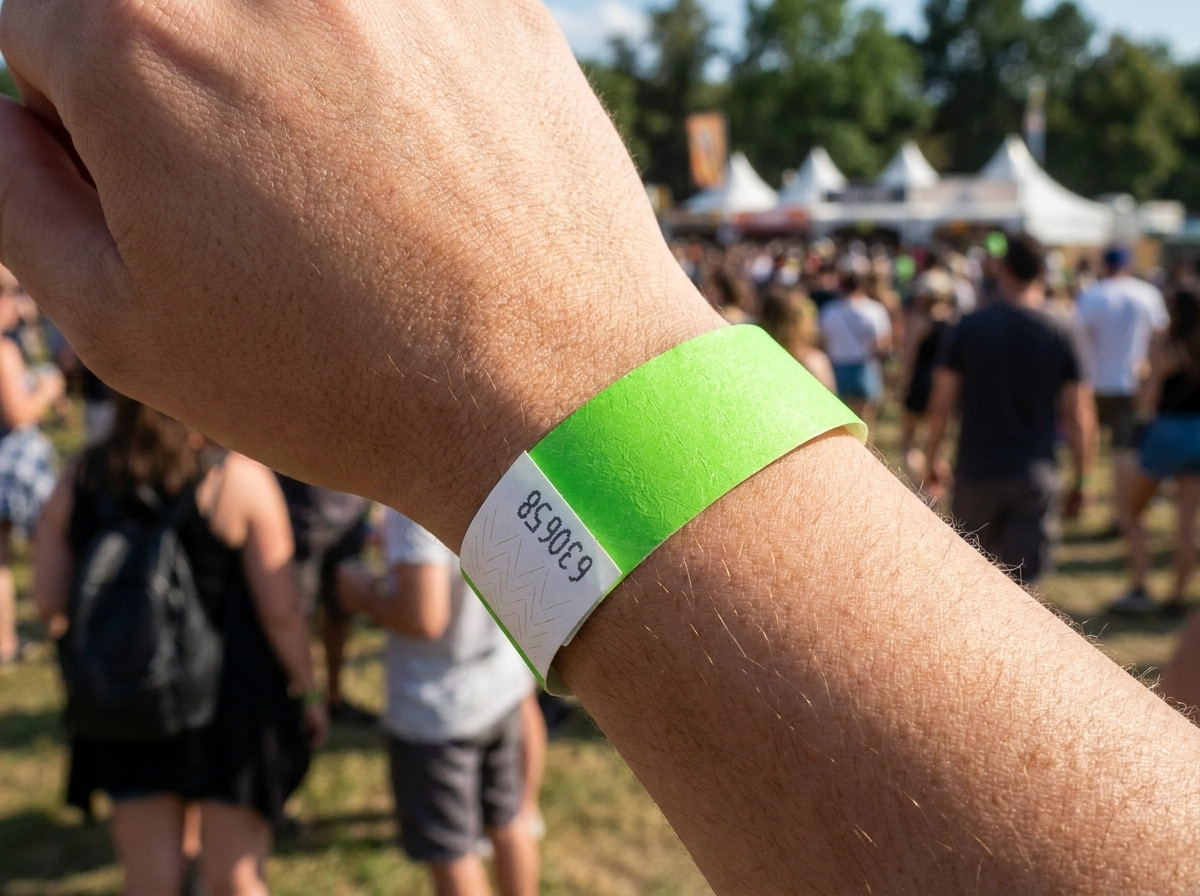
HD-printed Tyvek wristbands are the ideal solution. The material is durable enough for 12–24 hours of wear, the print quality is excellent, and the cost per unit is the lowest of any fully branded wristband option. Include an event logo, the date, and optionally a barcode or sequential number for basic access control.
Multi-Day Outdoor Festivals
For events lasting two days or more, especially those with camping or outdoor exposure, HD-printed vinyl wristbands are the correct choice. The PVC substrate resists sweat, rain, mud, and UV exposure far better than Tyvek. The anti-transfer closure ensures that wristbands stay on the original wearer throughout the event. Budget for slightly higher per-unit cost against the certainty that every band will remain readable and secure on day three.
Aquatic and Spa Environments
Waterparks, spa resorts, and pool events require a substrate that can withstand full submersion and chlorine exposure. Vinyl PVC wristbands with HD print are the only appropriate choice in this context. The inks used are waterproof, and the band itself will not soften or delaminate when wet.
Corporate Events and Conferences
Conference wristbands often need to carry more information than a festival band: session codes, dietary requirements, access tiers (speaker, delegate, press, exhibitor), or even a QR code linking to a digital profile. HD printing accommodates all of this data in a clean, professional layout. Vinyl wristbands in corporate colours with a branded logo make an impression on delegates that reinforces the event's overall production quality.
Hospital and Healthcare Settings
Patient identification wristbands require crisp, legible text and reliable barcodes above all else. HD printing ensures that a patient name, date of birth, and hospital number remain readable even after the wristband has been worn for several days. The non-transferable closure on vinyl bands adds an additional layer of security in patient-tracking workflows.
HD Print vs. Standard Print: A Direct Comparison
It is worth being explicit about what HD printing offers that standard printing does not, so you can make a genuinely informed purchasing decision.
- Resolution: HD printing operates at 1200 dpi or above; standard wristband printing typically runs at 300–600 dpi. The difference is visible at logo sizes below 30 mm and critical for barcodes below 20 mm wide.
- Colour range: Full CMYK colour is standard in HD printing. Some lower-cost processes are limited to 1–4 spot colours, requiring a simplified design.
- Variable data: HD digital printing handles sequential numbers and unique QR codes natively; older analogue processes require expensive tooling changes or additional labelling steps.
- Setup cost: HD digital printing has no plates, screens, or dies to set up. This eliminates the traditional minimum order quantities associated with screen printing and makes short runs of 50–100 wristbands economically viable.
- Turnaround: Because there is no plate-making stage, HD jobs go from approved artwork to printed wristband within hours rather than days.
The only meaningful trade-off is that HD printing may produce slightly less intense solid colours on very dark backgrounds compared to a dedicated spot-colour process. For the vast majority of wristband designs — which use logos, text, and patterns on lighter backgrounds — this difference is invisible in practice.