


What Is Wristband Lead Time — and Why Does It Matter?
Lead time is the total elapsed time between placing an order and having the finished wristbands in your hands and ready to use at the venue. It sounds simple, but it is actually the sum of several distinct stages, each of which can expand or compress depending on decisions made early in the process.
In practical terms, lead time breaks down into three phases:
- Artwork and pre-press: creating or approving the design that will be printed on the wristband.
- Production: the physical printing, cutting, and finishing of the wristbands on the factory floor.
- Transit: the time the parcel spends in the hands of the courier between dispatch and delivery to your address.
Most delays in wristband orders happen at the artwork stage, not in production. Organizers underestimate how long back-and-forth email revisions can take. When you rely on free, in-house graphic design — where you simply describe what you need and a professional creates the artwork for you — that bottleneck disappears almost entirely. The file goes straight from the designer's screen to the print queue without any external agency slowing things down.
Understanding which phase is the constraint in your specific order lets you take targeted action. If your event is in 48 hours, you need a supplier that can collapse all three phases simultaneously — and that is exactly the scenario where in-house manufacturing with express dispatch becomes decisive.
Tyvek Wristbands: The Fastest Option Available
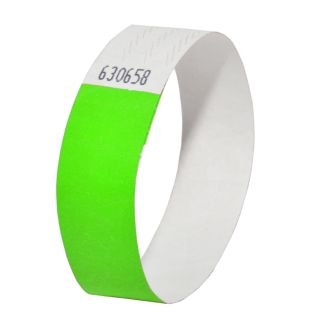
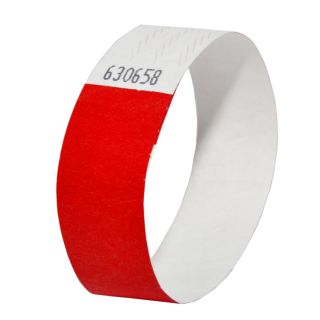
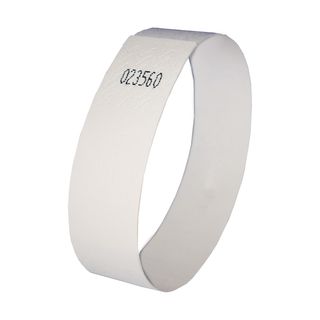
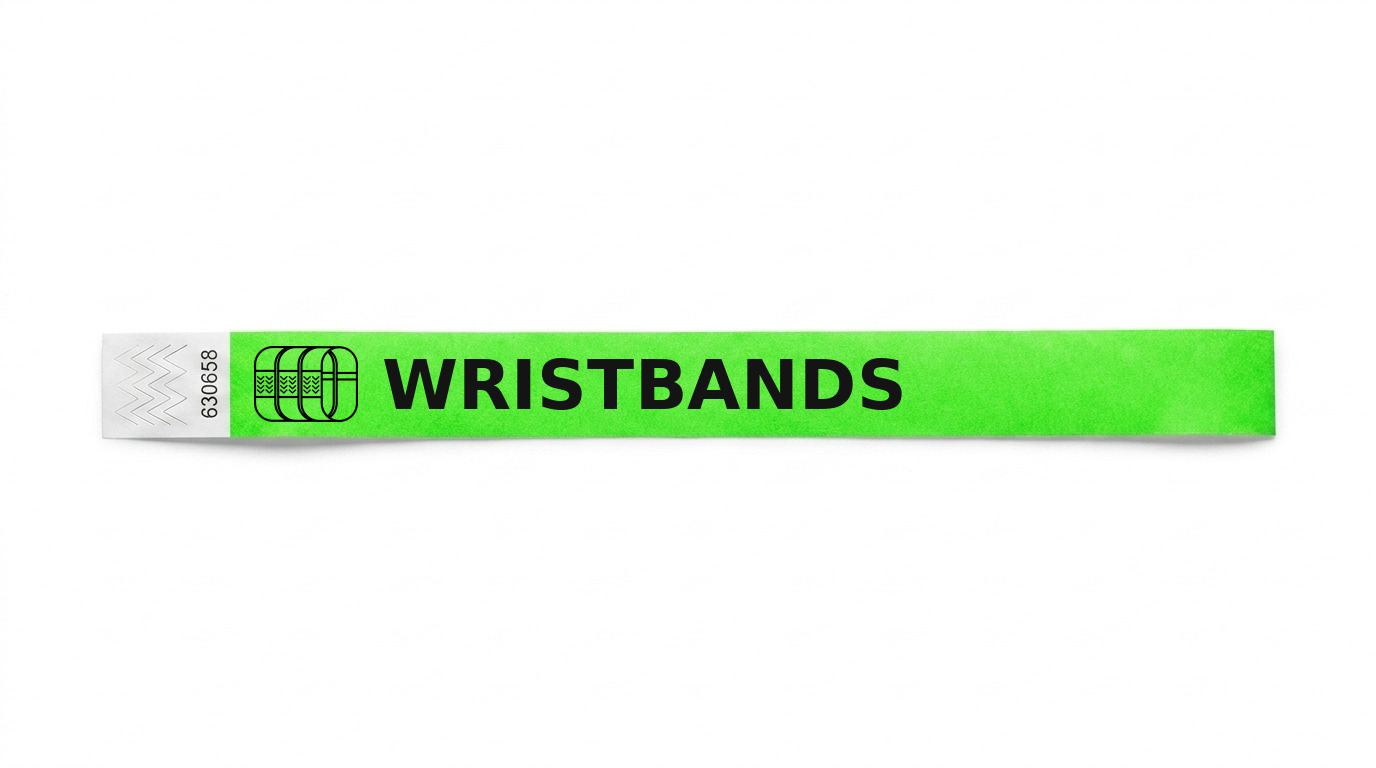
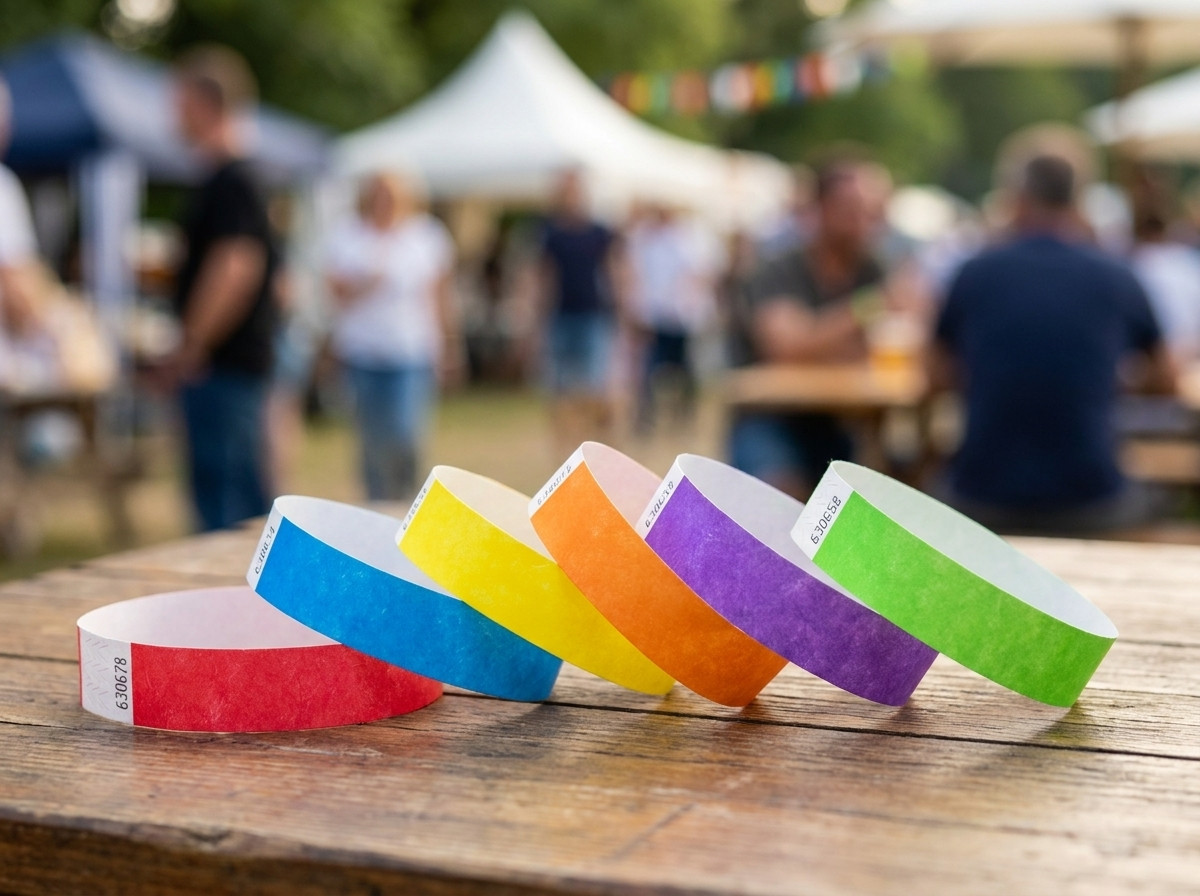
Tyvek is a synthetic material made from high-density polyethylene fibres. It looks and feels like paper but is far more tear-resistant, water-repellent, and difficult to transfer from one person's wrist to another. For high-volume, short-duration events — concerts, festivals, club nights, sporting events, charity runs — Tyvek wristbands are the industry standard precisely because they can be produced at enormous speed.
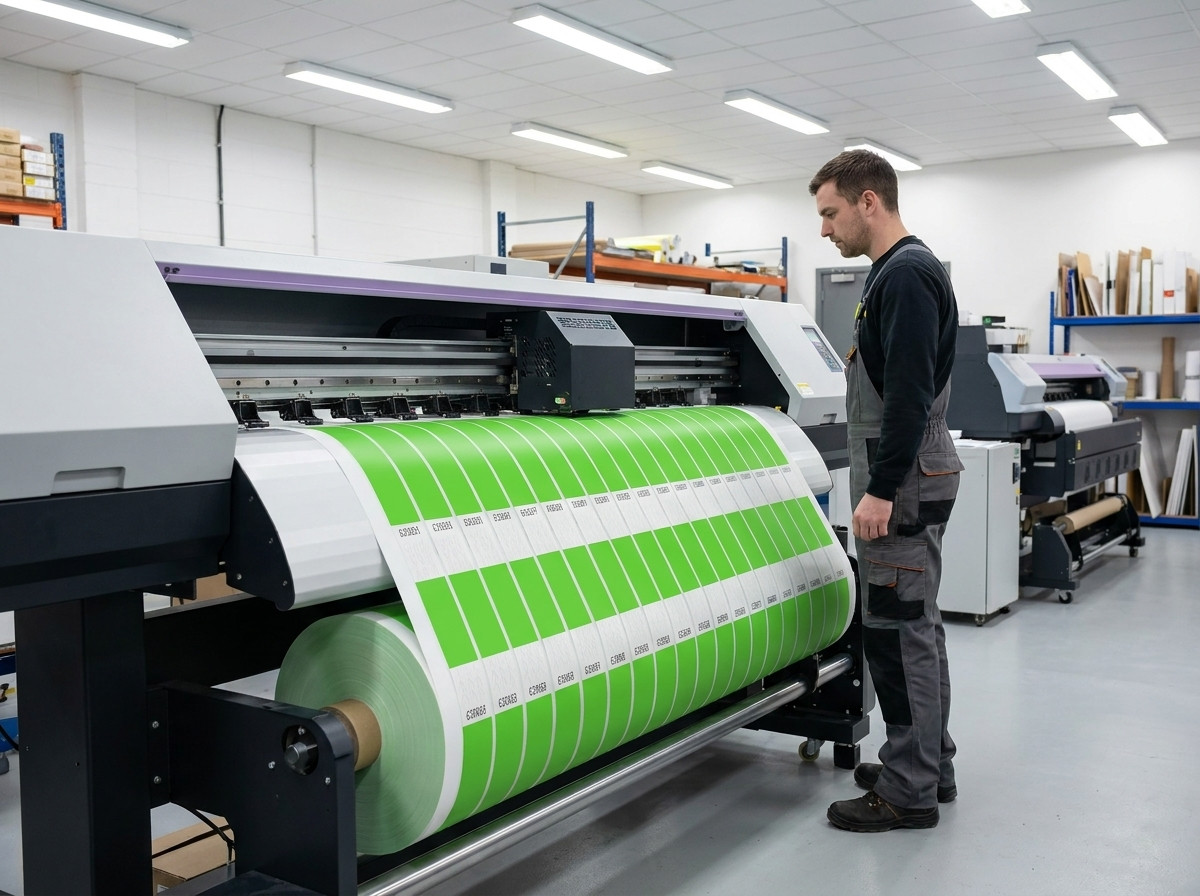
The defining feature from a lead-time perspective is that Tyvek wristbands can be printed the same day they are ordered. That is not a marketing claim hedged with conditions — it is a genuine operational reality when you place your order early enough in the day and the artwork is confirmed quickly. Because the material is printed in long rolls rather than individual sheets, the press can run thousands of units per hour. A batch of 500 wristbands takes a fraction of the time it would take to produce most other event merchandise.
Key production speed advantages of Tyvek include:
- Roll-fed printing: continuous printing with no manual feeding between units, so large quantities move fast.
- Fast drying inks: Tyvek accepts print inks that cure rapidly, reducing waiting time before finishing and cutting.
- Simple finishing: Tyvek wristbands use an adhesive closure, so there is no hardware to attach. The roll is printed, cut, and packaged — done.
- Lightweight packaging: even large quantities weigh very little, which means the parcel qualifies for the fastest express courier services without oversized surcharges.
There is also no rush surcharge for express production. Whether you order a week in advance or the morning of the day before your event, you pay the same production price. The speed is the standard, not an expensive upgrade.
Vinyl (PVC) Wristbands: Durable and Still Fast
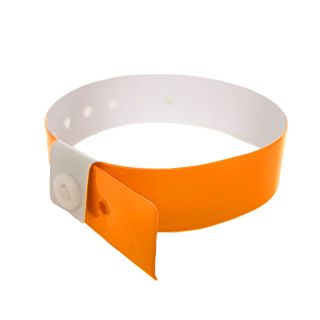
Vinyl wristbands — also called PVC wristbands — occupy the middle ground between disposable Tyvek and rigid plastic wristbands. They are waterproof, flexible, and durable enough to be worn for several days without degrading. Hotels use them for pool or spa access. Multi-day festivals use them to distinguish different ticket tiers. Amusement parks use them because they survive water rides, showers, and everything in between.
Vinyl wristbands take slightly longer to produce than Tyvek because the PVC substrate requires different print preparation and the anti-transfer snap closure must be attached or verified during finishing. That said, production is still measured in hours for standard orders, not days. When you factor in same-day or next-morning dispatch via DHL Express or FedEx Express, vinyl wristbands can realistically reach most destinations within one to two business days after order confirmation.
The anti-transfer closure is worth highlighting from a security standpoint: it is specifically engineered to be impossible to remove and reattach without visible damage. This makes vinyl wristbands suitable for events where ticket fraud or access control is a genuine concern, not just a formality. Security features do not slow down production — they are part of the standard manufacturing process.
Custom printing on vinyl wristbands supports high-definition artwork. Event logos, sponsor branding, QR codes, barcodes, and sequential numbering all reproduce cleanly on vinyl, giving organizers both visual identity and functional access-control tools on a single wristband.
Express Delivery: How the Transit Phase Works
Once wristbands leave the production floor, they enter the courier network. The transit phase is where many suppliers lose time — either because they use economy shipping as a default, or because they hand parcels off to couriers that do not offer true next-day or two-day international delivery.
Working with DHL Express and FedEx Express means parcels enter a network specifically designed for time-critical shipments. These are not standard parcel services with variable delivery windows — they are premium express networks with defined service levels, proactive tracking, and customs clearance support for international orders. For a domestic delivery, next-business-day arrival is achievable for parcels dispatched by early-to-mid afternoon. For European and international destinations, two to three business days is typically realistic depending on customs and destination country.
A few practical points about transit time that every organizer should understand:
- Cut-off times matter: a parcel dispatched at 15:00 enters the courier network that evening. One dispatched at 18:00 may not be collected until the following morning. Ask your supplier what their daily dispatch cut-off is.
- International orders may encounter customs: express couriers actively manage customs documentation, but for shipments crossing borders, build in at least one additional day as a buffer.
- Delivery address precision: express couriers deliver to specific addresses. Make sure your delivery address is the venue or a staffed reception, not a PO box, especially if the event is away from your office.
- Tracking: both DHL Express and FedEx Express provide real-time shipment tracking. Use it. Knowing exactly where your parcel is removes anxiety and lets you plan around the delivery window.
The combination of same-day or next-morning production with express dispatch creates what is effectively a 24-to-48-hour total lead time for domestic orders. That is the realistic best-case scenario when artwork is approved quickly — and with free in-house graphic design that eliminates the artwork delay, that scenario becomes the norm rather than the exception.
Last-Minute Orders: Real Scenarios Where Speed Saved the Day
The most useful way to understand what fast wristband production actually means in practice is to look at the situations it resolves. These are not edge cases — they happen regularly, and they represent some of the most common reasons event organizers reach out urgently.
The Forgotten Order
An event coordinator managing five simultaneous projects realizes on a Thursday afternoon that wristbands for Saturday's outdoor festival were never ordered. The supplier she originally planned to use has a five-day minimum lead time. By the time she contacts an in-house manufacturer with same-day Tyvek printing, it is already mid-afternoon. The order is placed, artwork is created and approved within the hour, and the wristbands are printed, packaged, and dispatched before the end of the day. They arrive Friday morning via DHL Express. Saturday's event runs without a hitch.
The Supplier That Failed
A corporate event agency ordered branded vinyl wristbands from a print broker six weeks before their client's product launch event. Two days before the event, the broker confirms the order has been lost in a production backlog and cannot fulfil it. The agency contacts an in-house manufacturer directly. Vinyl wristbands with the client's logo, sequential numbering, and brand colours are produced the next morning and dispatched for next-day delivery. The client never knows there was a problem.
The Quantity Change
A festival sells 800 more tickets than expected in the final week of presales. The existing wristband order is already shipped — but it is 800 units short. A top-up order placed Monday morning, with the same design file already on file, is printed and dispatched by Monday afternoon. The additional wristbands arrive Wednesday, two days before the festival gates open.
These scenarios share a common thread: the critical advantage is not just fast production in isolation, but fast production combined with fast design, fast dispatch, and a courier network that can actually deliver on the timeline promised. When manufacturing is done in-house and design is handled at no extra cost, every stage compresses simultaneously.
How to Minimise Your Own Lead Time: A Practical Checklist
Even the fastest manufacturer cannot help you if your side of the process creates delays. Here is what experienced event organizers do to ensure they receive wristbands as quickly as possible.
Decide on quantity and material before you contact the supplier
Know roughly how many attendees you expect and whether you need a disposable option (Tyvek) or a multi-day durable option (vinyl PVC). You do not need exact precision — a rough figure is enough to get production started. You can adjust quantities up or down before print confirmation.
Prepare your design brief in advance
You do not need to be a designer or provide a finished file. A clear brief — event name, date, logo if available, colours, any text or numbers you want — is enough for a professional graphic designer to create artwork in-house at no cost. The clearer your brief, the faster the artwork is approved. One round of revisions is typical; more than two rounds usually means the brief was incomplete.
Have your delivery address confirmed and staffed
Express couriers move fast. If your office is unstaffed or the venue has restricted access, the parcel can miss its first delivery attempt and add 24 hours to your timeline. Designate a delivery point where someone will be present during business hours.
Approve artwork promptly
This is where most lead times extend unnecessarily. When you receive a proof, review it and respond the same day. Every hour of delay at the approval stage is an hour removed from your production window.
Order earlier than you think you need to
Even with same-day production available, ordering five to seven days before your event gives you a comfortable buffer for quantity adjustments, artwork iterations, and any unexpected courier delays. Express production is a safety net — not the intended operating mode for every order.
Comparing Production Timelines: Tyvek vs. Vinyl
For organizers deciding between materials partly on the basis of speed, here is a direct comparison of realistic timelines assuming artwork is approved by mid-morning:
- Tyvek — same day dispatch: Ordered before mid-morning, artwork approved within one hour → printed, cut, packaged, and dispatched same day → domestic delivery next business day.
- Vinyl (PVC) — next day dispatch: Ordered and artwork approved same day → production completed → dispatched next morning → domestic delivery within one to two business days.
- International orders (both materials): Add one to two business days for transit depending on destination country and customs clearance.
In the majority of cases, the difference between Tyvek and vinyl in terms of delivery date is one day. For organizers with a few days of lead time, both materials are equally accessible. For organizers with fewer than 24 hours before they need wristbands in hand, Tyvek is the only realistic choice.
It is also worth noting that express production carries no rush surcharge. The price you pay for Tyvek wristbands ordered two weeks before your event is the same as the price you pay for Tyvek wristbands needed tomorrow. That pricing consistency makes last-minute ordering economically viable, not just logistically possible.