


What Are Disposable Wristbands?
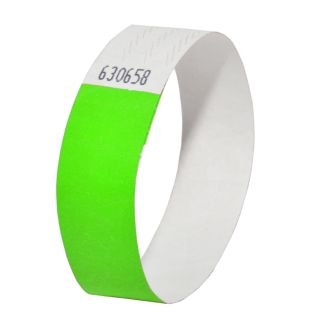
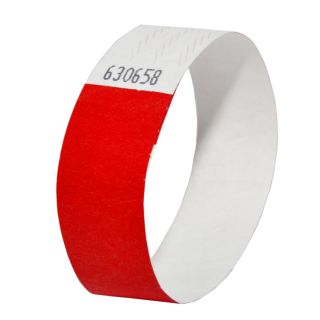
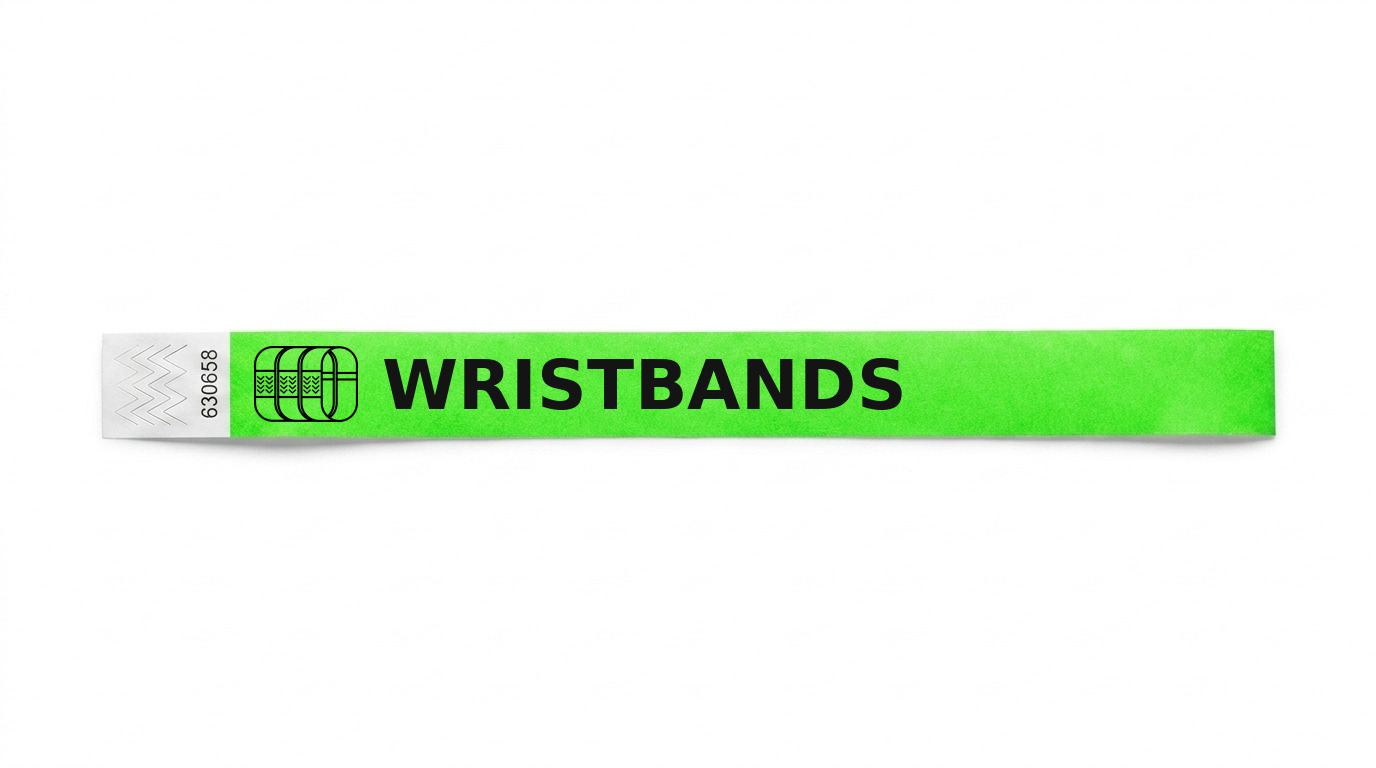
Disposable wristbands are single-use identification bands designed to be worn for the duration of one event and then discarded. They are not meant to be removed and re-applied — in fact, that is precisely the point. Once a disposable wristband is locked onto a guest's wrist, any attempt to remove it intact is either impossible or leaves unmistakable evidence of tampering. This tamper-evident closure is the security feature that makes disposable wristbands so effective for access control.
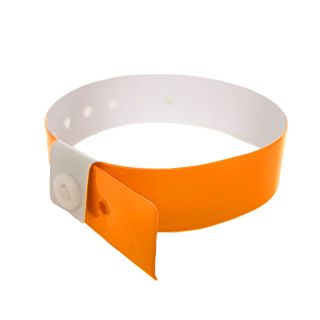
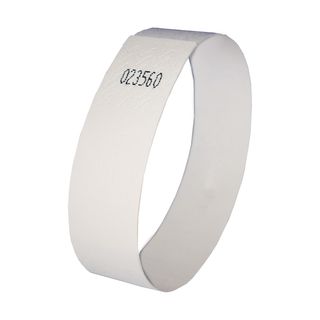
The two principal materials used for disposable wristbands are Tyvek and vinyl (PVC). Tyvek is a spunbonded olefin material manufactured by DuPont. It feels like heavy paper but behaves more like a textile — it is tear-resistant, water-resistant, and extremely lightweight. It accepts high-definition printing exceptionally well, which is why Tyvek wristbands can carry intricate logos, photographic imagery, QR codes, and sequential numbering at very low cost per unit. Vinyl (PVC) wristbands are thicker, more robust, and more comfortable against the skin over longer periods. They are the preferred choice when a disposable wristband must survive a full weekend rather than a single afternoon, or when the event environment involves heavy moisture such as water parks or outdoor festivals with unpredictable weather.
- Tyvek wristbands: Ultra-lightweight, cost-effective, full-colour printable, ideal for single-day events and high-volume issuance.
- Vinyl (PVC) wristbands: Thicker and more durable, comfortable for multi-day wear, water-resistant, available with snap or adhesive closures.
Because disposable wristbands are consumed in large quantities, fast production and delivery are critical. Tyvek wristbands can be printed the same day they are ordered — an enormous advantage when an event is days away or when a previous supplier has failed to deliver. Express dispatch via DHL Express and FedEx Express means that last-minute event organisers can still receive fully customised, print-ready wristbands in time, without paying a rush surcharge.
What Are Reusable Wristbands?
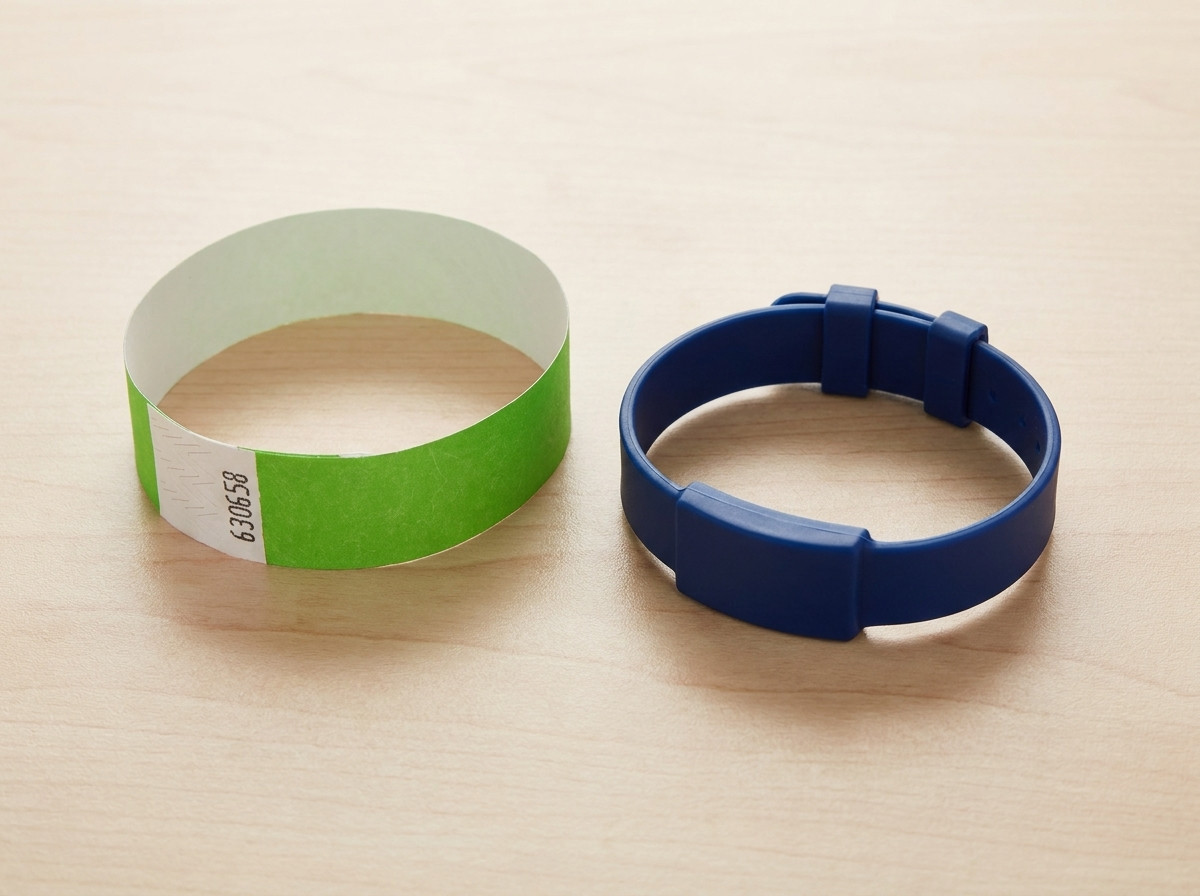
Reusable wristbands are designed to be worn, removed carefully, and issued again — whether to the same wearer or to a new one. The defining characteristic is durability: a reusable wristband must maintain its structural integrity, printed information, and closure mechanism through at least several cycles of wear and handling. Rigid plastic wristbands are the standard format for reusable applications, engineered to be robust enough to last across multiple days or multiple events within a season.
Reusable wristbands typically feature a locking mechanism that can be re-set, or a more flexible band body that allows the wristband to be gently eased off without cutting. Some formats use a stud-and-socket closure that staff can release with a dedicated tool, returning the band to a re-issuable condition. This reusability has direct cost implications: the higher per-unit cost of a rigid plastic wristband is offset when the band is used several times, amortising the purchase price across each use.
However, reusability introduces operational complexity. Returned bands must be collected, inspected, sanitised if necessary, and re-stocked before the next issue cycle. At large events with thousands of attendees, this logistics overhead can be significant. It also introduces a security risk: a used band that is not properly decommissioned could theoretically be passed to a second person as a counterfeit entry credential. For this reason, many organisers who use reusable wristbands for multi-day festivals combine them with a daily colour-coding system, a visual check against a printed schedule, or a barcode scan at each entry point.
Reusable wristbands are well-suited to:
- Multi-day festivals where the same attendee wears the band across two, three, or more days.
- Hotel wristband programmes that identify guests across a full holiday stay.
- Membership or loyalty schemes where the band signals an ongoing entitlement rather than a single admission.
- Corporate events or conferences spanning several days with a defined delegate list.
Disposable vs Reusable Wristbands: A Detailed Comparison
The best way to approach the disposable vs reusable wristband decision is to evaluate both options across the same set of criteria. Below is a structured breakdown of the most important dimensions.
Security and Tamper Resistance
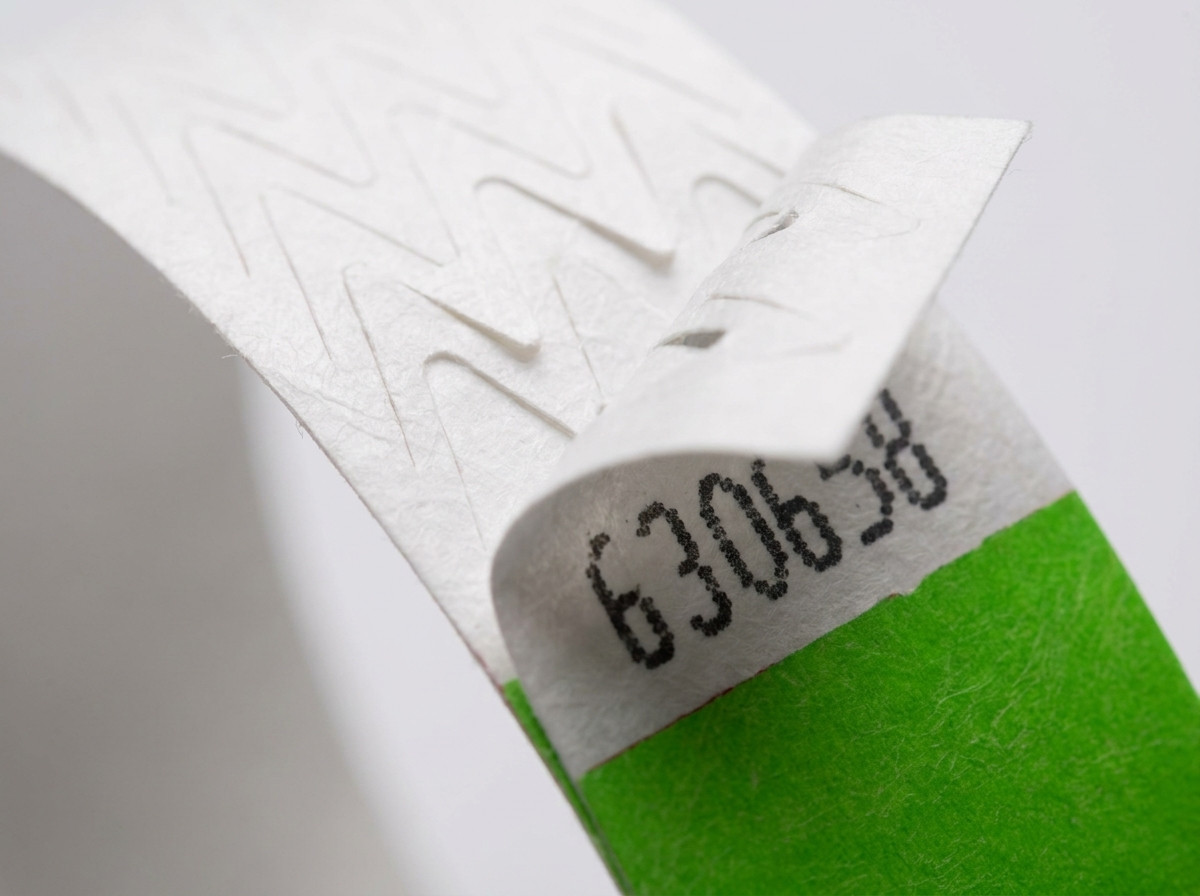
Disposable wristbands win on tamper evidence. A properly applied Tyvek or vinyl wristband cannot be removed without cutting, and a cut band is immediately obvious to any door staff. Anti-transfer closures — adhesive tabs that leave a visible void pattern if peeled — add another layer of security. Reusable wristbands can offer good security for the duration of an event, but their very re-usability means staff must be trained to check that bands have not been improperly transferred between individuals.
Cost Per Use
Disposable wristbands have a lower unit price, particularly Tyvek, but that price is spent after every use. Reusable wristbands cost more per unit but spread that cost across multiple events. If you run the same event format more than twice a year with a defined attendee base, a reusable wristband programme can be more economical. If your event is one-off or annual with a large guest count, disposable wristbands are almost always the more cost-efficient choice.
Customisation and Branding
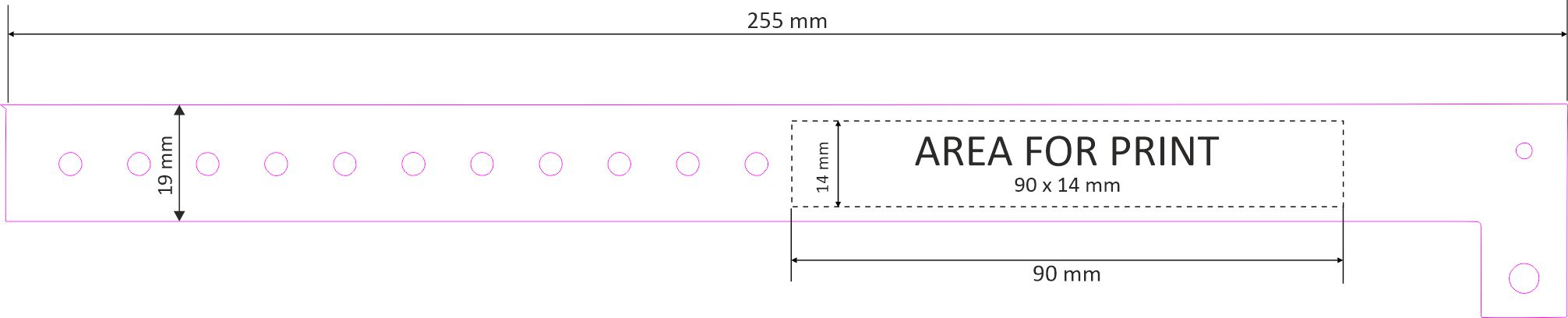
Disposable Tyvek and vinyl wristbands support high-definition full-colour printing. Logos, event names, dates, sponsor branding, gradient backgrounds, QR codes, sequential numbering — all of it prints cleanly and accurately. Free graphic design assistance means there is no barrier for organisations without in-house artwork capability: describe what you want and professional print-ready artwork is created at no extra cost. Rigid plastic reusable wristbands also support printing and colour customisation, but the detail achievable on a narrow plastic band is inherently more limited than on the broader canvas of a Tyvek wristband.
Comfort and Wearability
For events lasting a few hours, all wristband types are comfortable. For multi-day wear, vinyl PVC wristbands are notably more comfortable than Tyvek because the material is softer against skin and does not absorb moisture. Rigid plastic reusable wristbands are generally the most comfortable for extended wear, particularly adjustable-snap formats that allow the wearer to find their preferred fit. Tyvek, while remarkable for its durability relative to its weight, can feel slightly stiff after prolonged contact with perspiration.
Environmental Considerations
Disposable wristbands generate waste. This is a real consideration, and one that event organisers increasingly raise. Tyvek is technically recyclable in specialist streams, though consumer-level recycling infrastructure for it remains limited. Vinyl (PVC) has a longer useful life per band and generates less waste per event when used in multi-day contexts. Reusable wristbands eliminate per-event waste when properly managed, but they require energy and water for cleaning between uses, and their plastic bodies will eventually reach end-of-life. There is no perfectly green answer here; the most responsible approach depends on your specific event logistics and local waste infrastructure.
Lead Time and Last-Minute Orders
This is where disposable wristbands — specifically Tyvek — hold an unmatched advantage. Because Tyvek wristbands can be printed the same day they are ordered, they are the only realistic option for last-minute events or emergency replacements. Events organisers who discovered at 48 hours' notice that their previous supplier had failed to produce their order have been rescued by same-day Tyvek production combined with express courier delivery via DHL Express or FedEx Express. Reusable rigid plastic wristbands require a longer production and finishing cycle and are not suited to emergency situations.
Choosing the Right Wristband for Your Event Type
With the comparison framework established, it becomes much easier to match the right wristband type to the right event. Below are the most common event scenarios and which wristband category serves them best.
Single-Day Music Festivals and Concerts
Disposable Tyvek wristbands are the industry standard for single-day events. They can be ordered in large quantities at low cost, customised with the event's visual identity, and issued rapidly at entrance gates. The tamper-evident adhesive closure means that transferred or counterfeit entry is immediately spotted by staff. For festivals with VIP tiers or backstage access, different coloured Tyvek wristbands provide instant visual differentiation without any additional technology.
Multi-Day Outdoor Festivals
Multi-day festivals present a genuine choice. Vinyl PVC disposable wristbands are the popular option: they are robust enough to survive two to four days of outdoor wear including swimming, rain, and physical activity, they remain tamper-evident, and they can carry full-colour branding and sequential numbering for capacity tracking. Reusable rigid plastic wristbands are chosen when the organiser operates the same festival annually and wants to recover bands for next year's event, or when the environmental argument for reusability aligns with the event's brand values.
Hotel and Resort All-Inclusive Programmes
Hotels and resorts identifying guests within an all-inclusive programme typically use vinyl PVC wristbands for their comfort and durability over a one- or two-week stay. The wristband signals meal, pool, and activity entitlement and must survive daily water exposure. Reusable plastic wristbands are also used in longer-stay or repeat-visit contexts where the hotel issues a seasonal pass format.
Trade Shows, Conferences, and Corporate Events
Trade shows and conferences typically span one to three days and prioritise fast, accurate identification over decorative customisation. Tyvek wristbands with sequential numbering or barcodes are ideal for badge-free day-pass identification. When a conference spans multiple days with tiered delegate access, vinyl wristbands in distinct colours per tier — printed with a barcode for scanner integration — provide an elegant low-tech solution that staff can verify at a glance.
Children's Events and Theme Parks
Children's events have specific requirements: the wristband must not come off accidentally, it must be comfortable on a smaller wrist, and it often needs to carry an identification detail (name, contact number) in case a child becomes separated from their group. Tyvek wristbands with custom-printed fields or pre-printed sequential numbering that can be paired with a register satisfy all these needs. The write-on surface of certain Tyvek formats also allows staff to add handwritten notes directly on the band.
Water Parks and Aquatic Events
Water parks and aquatic environments demand materials that simply do not degrade when wet. Vinyl PVC wristbands are the correct answer here. Unlike Tyvek, which can soften and eventually delaminate with sustained immersion, PVC maintains its integrity through repeated water exposure. Closures should be snap or adhesive types that cannot be loosened by water pressure.
Practical Ordering Advice and What to Specify
Whether you decide on disposable or reusable wristbands, a smooth ordering experience depends on providing clear specifications upfront. Here is what to consider and communicate when placing your order.
Quantity and Buffer Stock
Always order slightly more wristbands than your expected attendance. A buffer of 5–10% accounts for application errors (bands that are applied incorrectly and must be cut off immediately), unexpected walk-in admissions, and bands damaged in transit or storage. Running out of wristbands at an entrance gate is a logistical crisis; having a small surplus costs very little.
Colour Coding
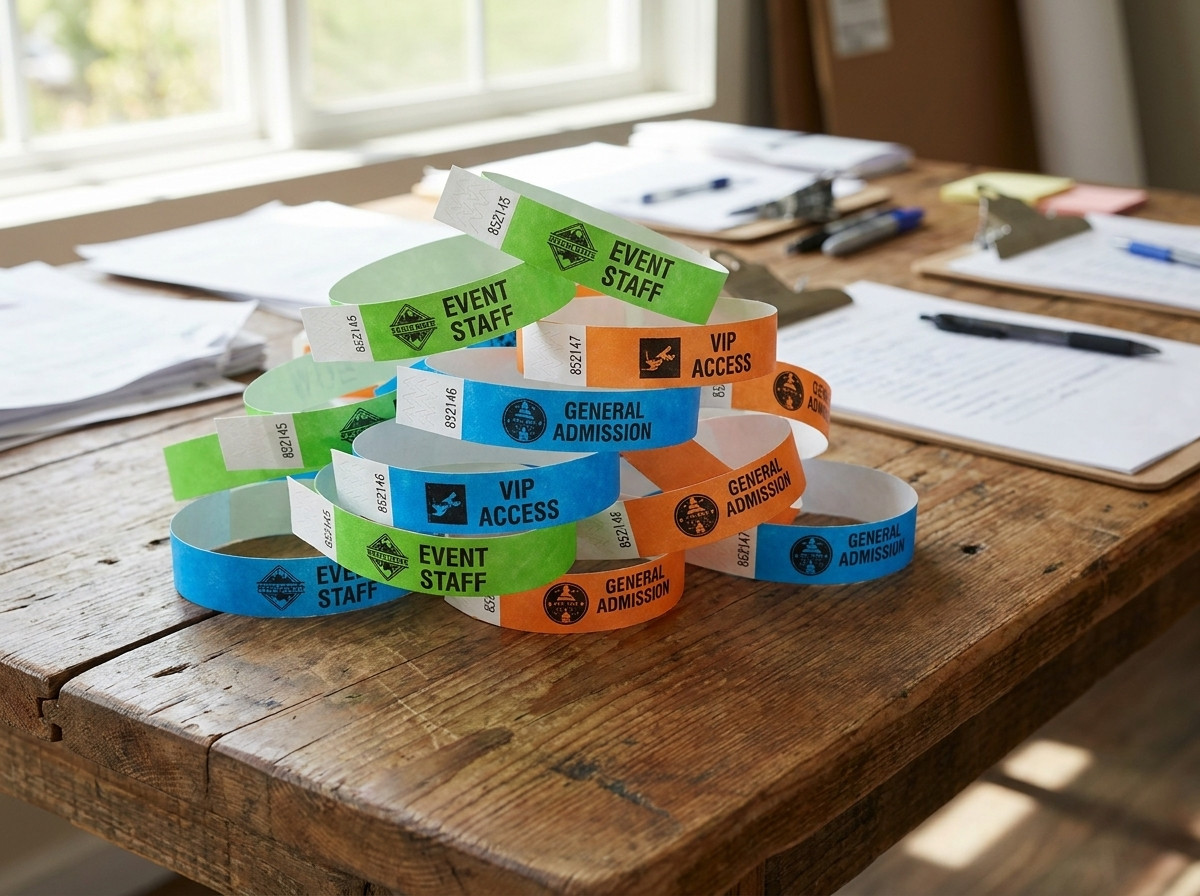
If your event has multiple access tiers — general admission, VIP, backstage, staff — use distinct colours for each tier. Even at a glance, in a crowded venue, a different-coloured wristband is unmistakable. Tyvek and vinyl wristbands are both available in a wide range of base colours, and full-colour printing means the design on each tier can be entirely distinct rather than relying on colour alone.
Variable Data: Barcodes, QR Codes, and Sequential Numbering
If you use scanners at entry points, ensure your wristbands include a barcode or QR code that corresponds to your ticketing database. Sequential numbering without a barcode is useful for manual capacity counts and fraud investigation after the event. These data elements must be specified at the design stage — free graphic design support means the artwork will be prepared correctly so that codes are scannable at the correct print size and resolution.
Artwork and Design Lead Time
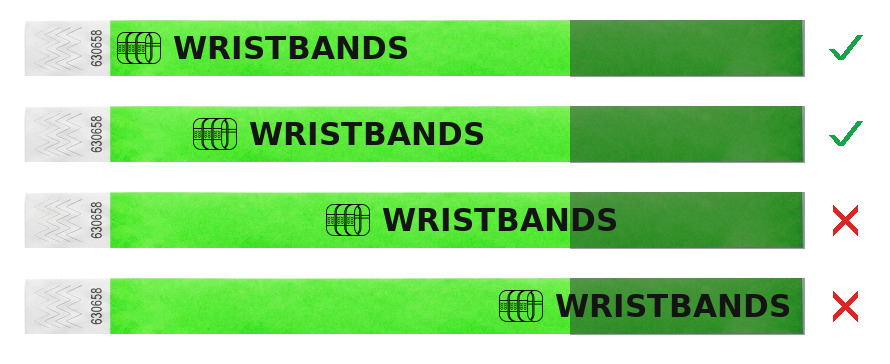
One of the most common causes of last-minute delays is not production time — it is artwork approval time. When ordering, be prepared to communicate your event name, dates, logo, colour scheme, and any access-tier text you need on the band. Professional artwork is created at no additional cost, but the faster you supply the brief, the faster the design can be approved and production can begin. For same-day Tyvek production, submitting your brief first thing in the morning is the key to receiving print-ready confirmation before noon.
Closure Types
Specify the closure type that matches your staffing situation. Adhesive closures are fast to apply and highly tamper-evident but require no tool. Snap closures are durable and re-adjustable. Anti-transfer adhesive closures leave a visible void pattern when peeled, making transfer attempts unmistakable. For children's events, choose a closure that is secure against small hands but can be released by an adult without scissors.
The wristband comparison ultimately comes down to this: if you need speed, volume, security, and full customisation for a single use, disposable wristbands — particularly Tyvek for urgency and vinyl for durability — are the right answer for the overwhelming majority of events. If you are running a managed programme where the same bands will be issued, recovered, and re-issued multiple times, reusable plastic wristbands are worth the operational overhead. Either way, the key is ordering early enough to avoid the stresses of a last-minute crisis — and knowing that same-day production and express courier delivery exist as a genuine fallback when circumstances make early ordering impossible.