


Understanding the Two Materials: What Are Tyvek and Vinyl?
Before comparing them head to head, it helps to understand what each material actually is and how it is manufactured.
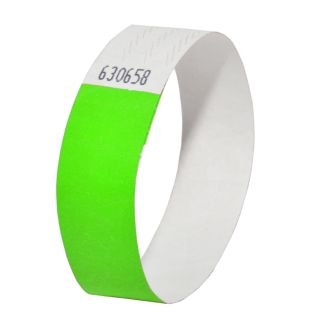
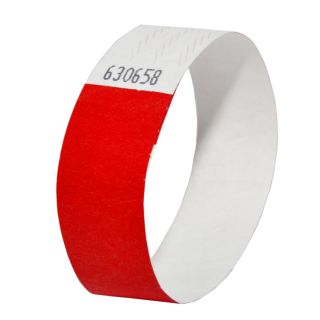
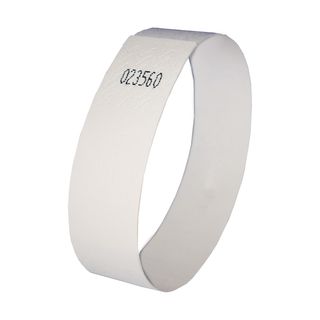
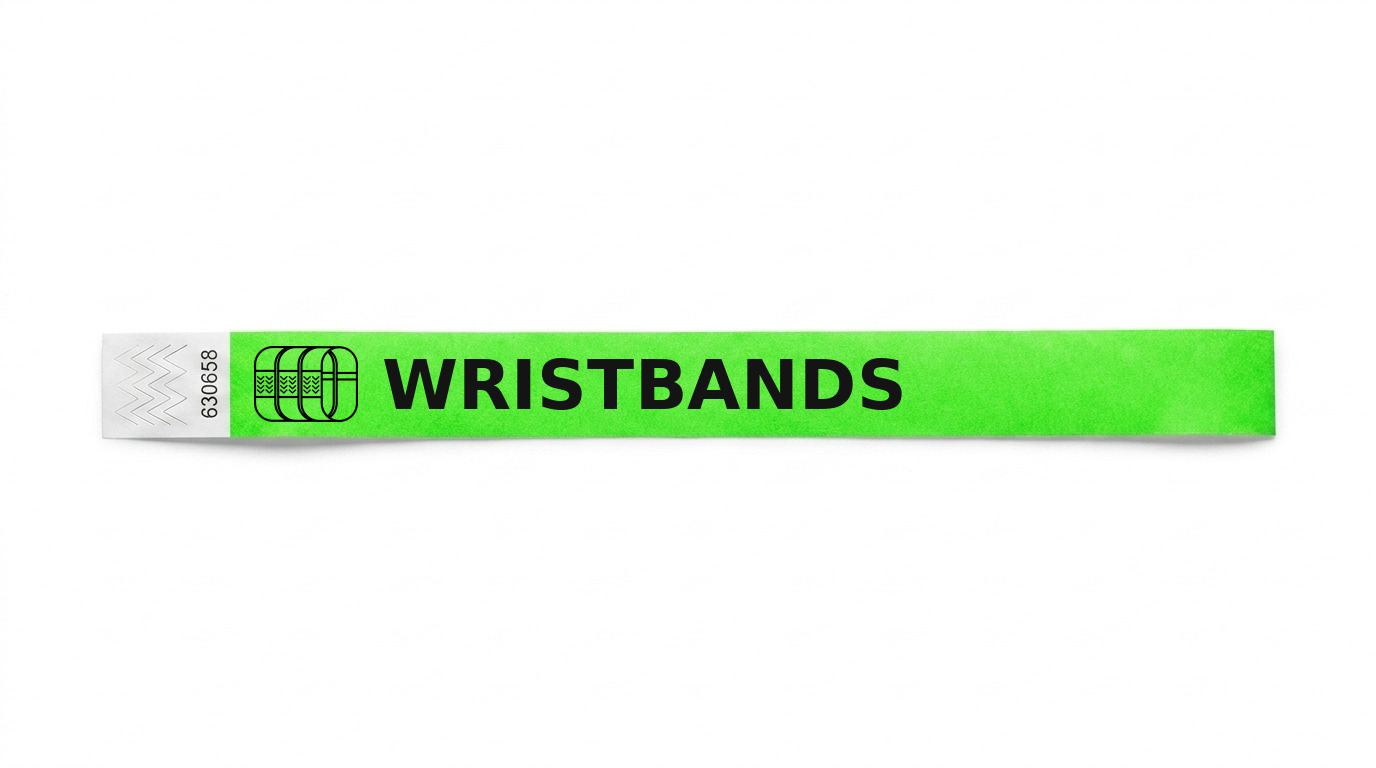
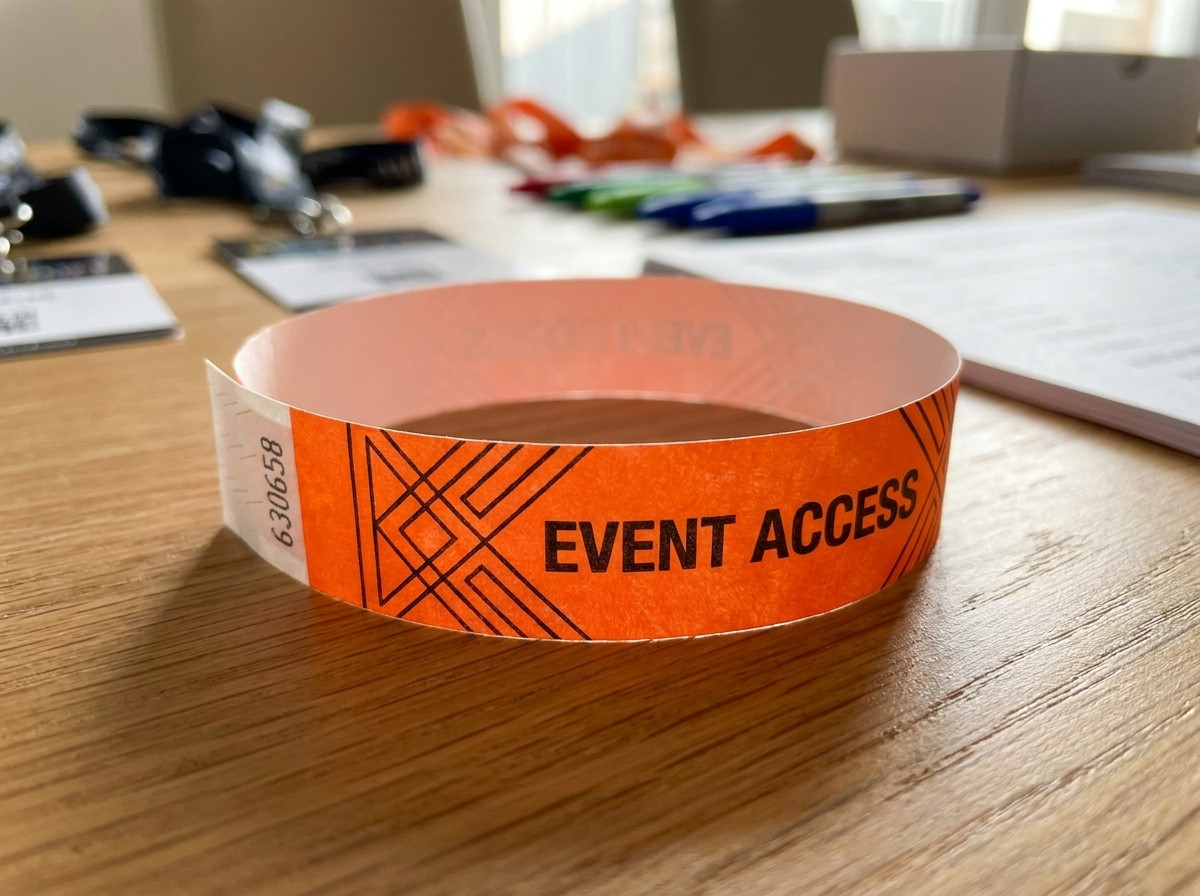
Tyvek is a brand-name material owned by DuPont, but in the wristband industry it has become a general descriptor for wristbands made from spunbonded olefin — a network of high-density polyethylene (HDPE) fibers that are thermally bonded without any binders or fillers. The result is a material that feels like paper but behaves more like a fabric: it tears when you pull it apart by hand yet resists accidental tearing during normal wear. It is lightweight, breathable to a degree, and accepts ink with exceptional sharpness.
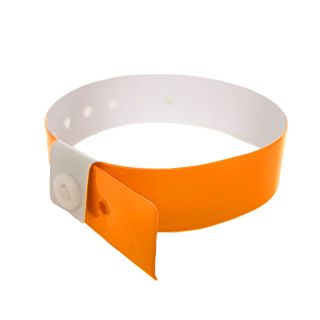
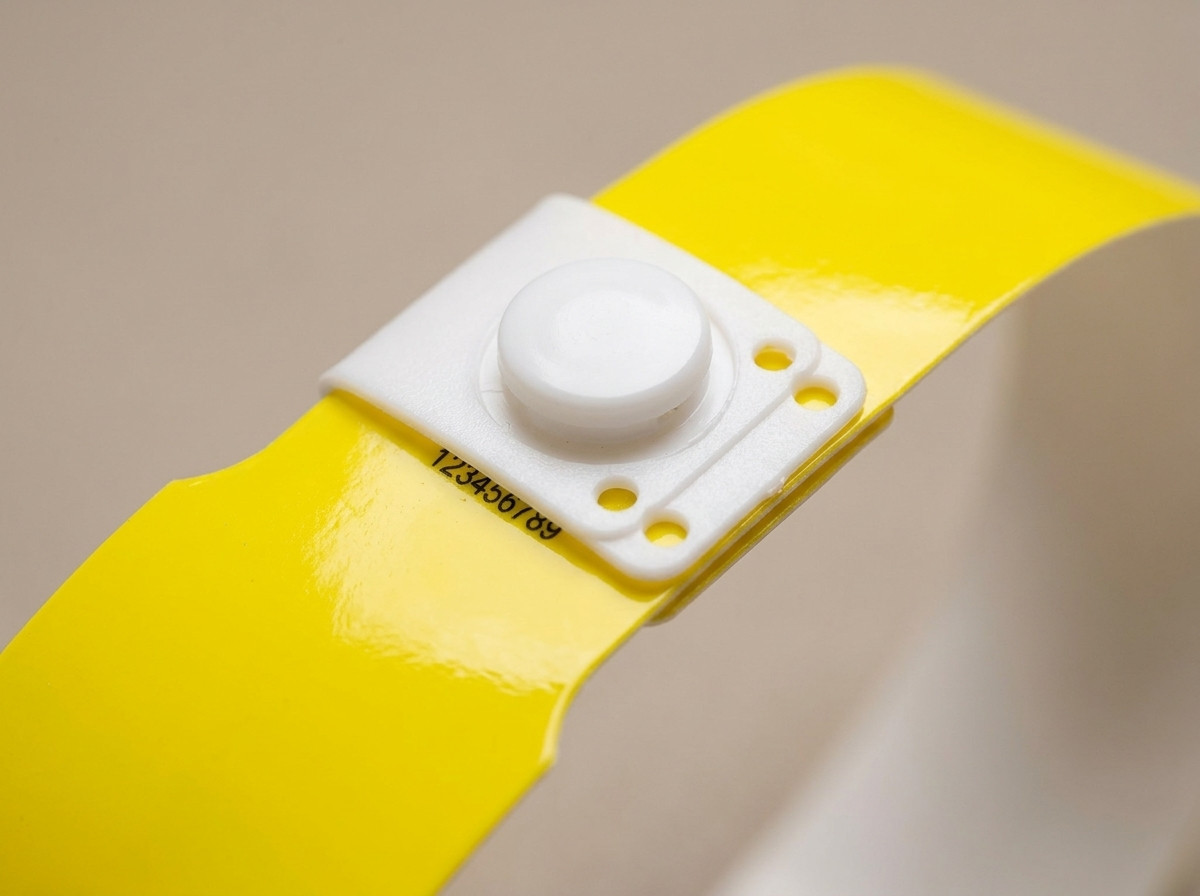
Vinyl (PVC) wristbands are made from polyvinyl chloride — the same broad category of plastic used in credit cards, garden hoses, and medical tubing, though formulated here as a thin, flexible strip. Vinyl wristbands are considerably heavier and more substantial than Tyvek. They are fully waterproof, resistant to abrasion, and hold up under conditions that would cause a Tyvek band to degrade — prolonged submersion, heavy perspiration, muddy festival fields, and repeated hand-washing.
Both materials are manufactured with a locking closure system. Tyvek wristbands typically use a simple adhesive strip, while vinyl wristbands feature a plastic snap-lock or adjustable slider closure that is designed to be non-transferable — once applied, it cannot be removed and reapplied without visible damage.
Key Properties Compared: Durability, Water Resistance, and Comfort
These three functional properties drive most purchasing decisions. Here is how the two materials stack up across each dimension.
Durability and Wear Life
Tyvek wristbands are designed for single-day or short multi-day use. Under normal conditions — a concert, a trade show, a theme park visit, a one-day festival — a Tyvek band will hold up perfectly from opening gate to closing time. However, after 24–48 hours of continuous wear, especially with exposure to moisture or friction, the material begins to show wear: edges fray, the print can fade, and the adhesive closure weakens.
Vinyl wristbands, by contrast, are engineered for multi-day and extended wear. A well-made vinyl band can remain intact and legible for a week or longer. This makes them the standard choice for multi-day music festivals, holiday resorts, cruise ships, hospital patient identification, and any scenario where the wristband must survive daily showers, pool sessions, or high physical activity.
Water and Moisture Resistance
This is one of the starkest differences between the two materials. Vinyl is fully waterproof — it can be submerged repeatedly without any degradation in structural integrity or print legibility. Tyvek, while more water-resistant than plain paper, is water-resistant rather than waterproof. Brief exposure to rain or splashing is generally fine, but prolonged soaking will cause the adhesive to release and the material to soften and tear more easily.
If your event involves swimming pools, water parks, beach settings, or outdoor festivals where attendees may be caught in heavy rain over multiple days, vinyl is the unambiguous choice. For indoor events, covered venues, or same-day outdoor events, Tyvek performs excellently.
Comfort and Wearability
Tyvek wristbands are thinner, lighter, and — because of the fibrous structure of the material — more breathable than vinyl. Most wearers barely notice a Tyvek band after a few minutes. Vinyl is heavier and can feel warmer against the skin during hot weather or intense physical activity. That said, modern vinyl wristbands are designed to be smooth-edged and flexible enough that the vast majority of wearers find them perfectly comfortable for extended periods.
Security Features: Anti-Transfer Closures and Tamper Evidence
Security is a critical factor for any paid-admission event. Both Tyvek and vinyl wristbands can be made tamper-evident, but they work differently.
Tyvek security closures rely on a pressure-sensitive adhesive strip. Once the wristband is pressed closed around a wrist, the adhesive bonds strongly. Attempting to remove the band and transfer it to another person will visibly destroy the band or at minimum leave obvious evidence of tampering — the material tears rather than peels cleanly. For one-day events with competent staff checking wristbands, this level of security is entirely sufficient.
Vinyl anti-transfer closures use a rigid plastic snap-lock or ratchet slider that locks in one direction and cannot be reversed. The closure tab often features a tamper-evident design where the plastic pin breaks or the tab is visibly damaged if the band is forced open. This mechanical locking system is considerably harder to defeat than an adhesive closure, making vinyl the preferred choice for high-value multi-day events, VIP areas, or situations where ticket fraud is a genuine concern.
Both material types can incorporate sequential numbering, barcodes, and QR codes as additional verification layers. Sequential numbering allows organizers to track which bands have been issued and detect duplicates. Barcodes and QR codes enable electronic scanning at entry points, reducing queue times and eliminating human error in visual checks.
Custom printing also contributes to security. A wristband printed with your logo, event name, and date is considerably harder to counterfeit than a plain-colored band. High-definition printing on both Tyvek and vinyl produces fine detail, gradients, and photographic imagery that amateur counterfeiters cannot easily replicate.
Printing Quality, Customization, and Branding
Both materials accept high-definition full-color printing, but there are subtle differences in how ink behaves on each surface.
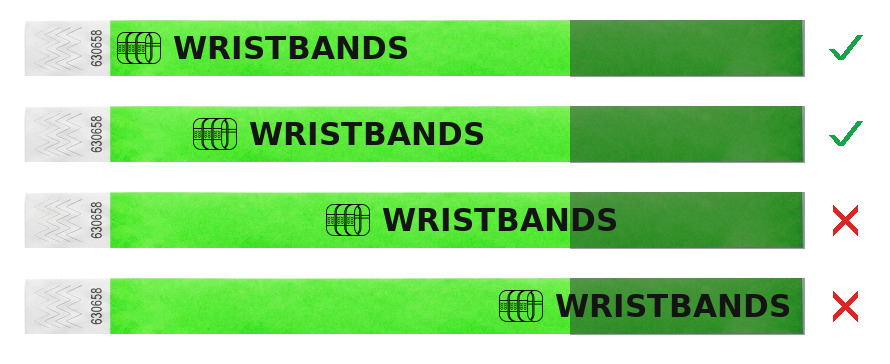
Tyvek has a slightly matte, paper-like surface that absorbs ink cleanly. Colors appear vivid and text is crisp. Because the material is white by default, the entire printable surface is available for design. The relatively narrow width of a standard wristband means design space is limited, but skilled graphic designers can make excellent use of it with logos, patterns, sponsor branding, event names, and entry tier information.
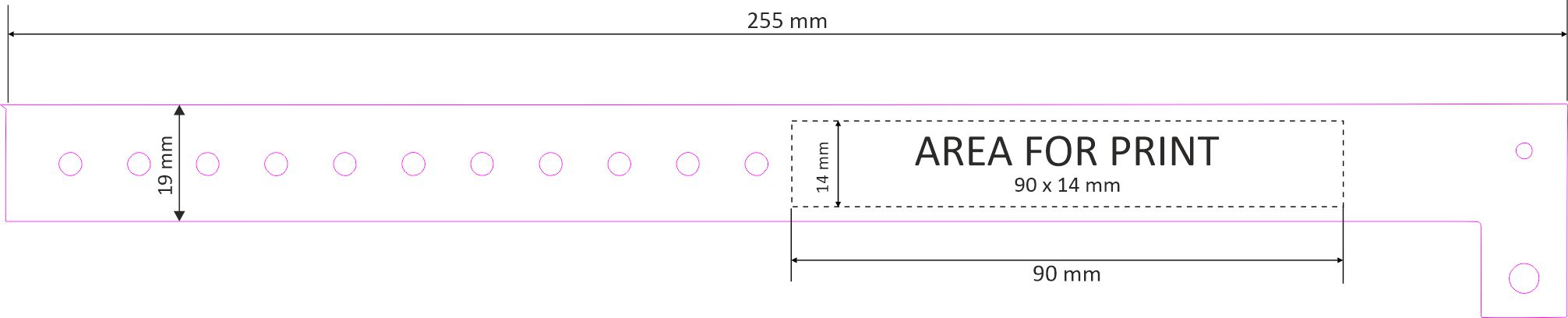
Vinyl has a smooth, slightly glossy plastic surface. Colors can appear even more saturated and vibrant on vinyl due to the reflective quality of the surface. The larger surface area of a standard vinyl wristband (which is wider and longer than Tyvek to accommodate the mechanical closure) provides more real estate for complex designs.
For organizers who are not designers, the good news is that professional artwork creation does not need to be an additional cost or barrier. When you order wristbands, you simply describe what you need — your event name, logo, colors, any text — and a graphic design team creates print-ready artwork at no extra charge. This ensures your wristbands look professional regardless of whether you have an in-house designer.
Tyvek is also available in a range of pre-colored base stocks (not just white), which allows for color-coded access tiers even with minimal custom printing. Vinyl wristbands likewise come in a wide palette of base colors and can be printed on top of those colors for maximum visual differentiation between access zones.
Typical Use Cases: Which Material Fits Which Event?
The most practical way to choose is to match the material to the event profile. Here is a breakdown of common event types and which material is typically the better fit.
Best uses for Tyvek wristbands
- Single-day festivals and concerts — Tyvek performs perfectly for events that end the same day they begin. Cost-effective, easy to issue at the gate, and secure enough for one-day use.
- Trade shows and exhibitions — where attendees need a visible credential for the duration of a single day or a one-day pass to a multi-day show.
- Club nights and venue admissions — quick to apply, visually distinctive, and impossible to transfer without destruction.
- Corporate events and conferences — when differentiation between attendee tiers (full access vs. exhibition only, for example) is needed at low cost.
- Children's events and family days — lightweight and comfortable for young wearers; can be printed with emergency contact information or wristband numbers for child safety protocols.
- Large-volume, budget-sensitive events — Tyvek is consistently more affordable per unit than vinyl, making it the right choice when thousands of wristbands are needed and the event is completed within a day.
Best uses for vinyl wristbands
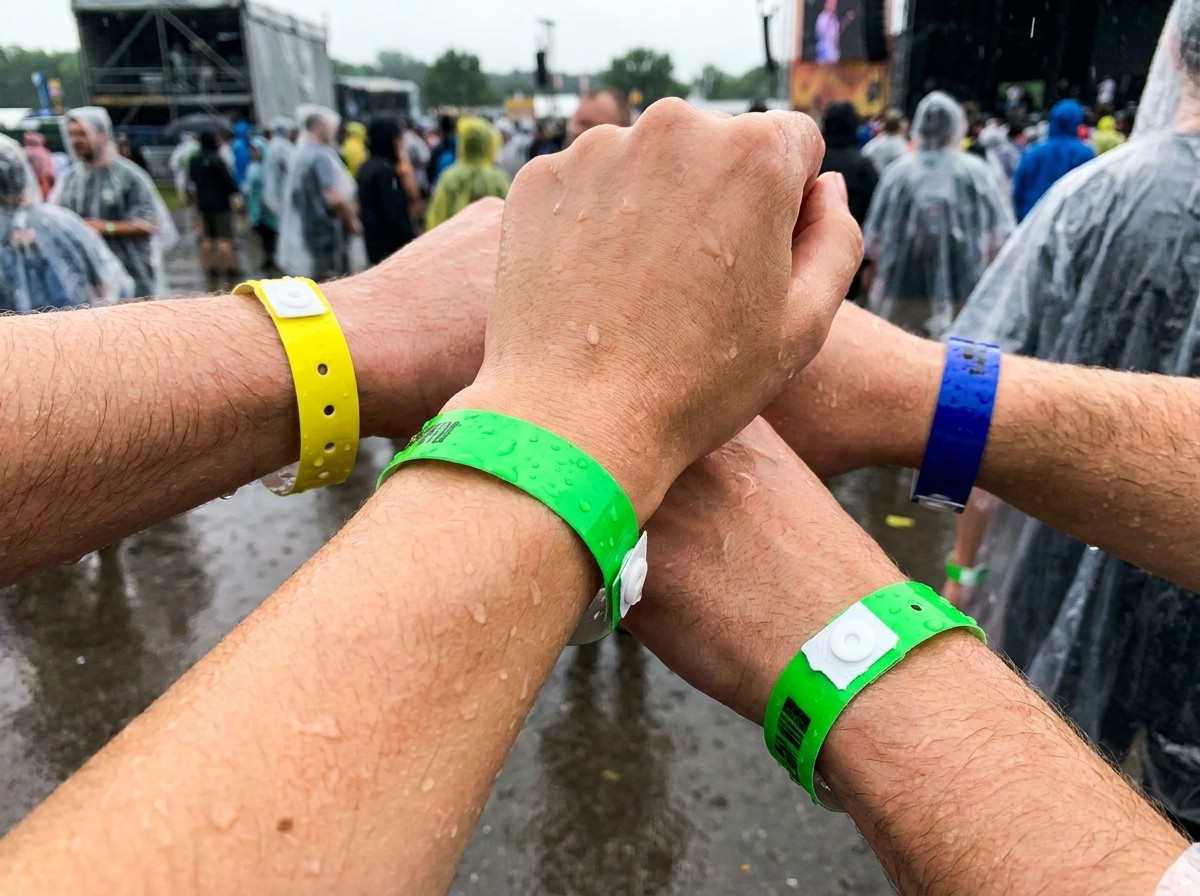
- Multi-day music festivals — the definitive use case for vinyl. Attendees camp, swim, dance in the rain, and sleep in their wristbands. Only vinyl survives all of that.
- Hotels and resorts — all-inclusive resorts routinely use vinyl wristbands to identify guests and their meal and drinks entitlements throughout a week-long stay.
- Water parks and aquatic facilities — full waterproofing is non-negotiable here. Vinyl is the only sensible choice.
- Hospital and healthcare settings — patient identification bands that must survive multiple days, frequent hand-washing, and medical procedures need the durability of vinyl.
- VIP and premium access programs — the higher perceived value of a vinyl band, combined with its mechanical anti-transfer closure, makes it appropriate for premium tiers where security and aesthetics both matter.
- Long-duration sporting events — marathons with multi-day race villages, endurance events, and team sports tournaments where athletes need ongoing identification.
Cost, Lead Time, and Last-Minute Orders
Budget and timing are practical realities that influence material choice just as much as technical properties.
Cost per unit: Tyvek wristbands are generally less expensive per unit than vinyl, especially at high quantities. The manufacturing process for Tyvek is faster and the raw material cost is lower. For events with thousands of attendees where per-unit cost is a meaningful budget line, Tyvek delivers strong value. Vinyl wristbands cost more per unit, but the premium is justified when multi-day durability or enhanced security is required.
Production speed: Tyvek wristbands can be produced extremely quickly. Because the manufacturing and printing process is so efficient, it is genuinely possible to place an order in the morning and have wristbands printed and ready to dispatch the same day — with no rush surcharge applied. This is not a marketing claim; it reflects the actual production workflow for Tyvek. Vinyl wristbands require a slightly longer production window due to the more involved manufacturing process, but they too can be turned around rapidly compared to industry norms.
Delivery: Orders are dispatched via DHL Express and FedEx Express, meaning that even last-minute orders can reach organizers in time. This matters enormously in practice. Event organizers frequently find themselves in situations where wristbands were forgotten until the week of the event, or a previous supplier failed to deliver — and in these situations, fast production combined with express courier services is the difference between a smooth event entry and a logistical crisis at the gate.
Design and setup: Neither material incurs an additional charge for graphic design. Whether you need a full-color branded design for a vinyl wristband or a simple logo-and-date layout on Tyvek, the artwork is created professionally at no extra cost. This removes a common hidden expense from the total cost calculation and allows even small-budget organizers to achieve a polished, professional result.
Environmental Considerations
Sustainability is an increasingly important factor in event planning, and material choice plays a role here too.
Tyvek is made from HDPE, a recyclable plastic polymer. Because it contains no binders, dyes, or fillers, clean Tyvek can technically be recycled where appropriate facilities exist, though the thin-film format means it is rarely collected in standard municipal streams. Its light weight means lower transport emissions per unit. Its single-use nature — by design — does mean it is discarded after each event.
Vinyl (PVC) is a less straightforward material from a recycling perspective. PVC requires specialized recycling infrastructure and is not commonly accepted in standard household recycling. However, because vinyl wristbands are used for longer periods and are applied to fewer individuals per event-day (multi-day events), the total waste volume per event is often lower than the equivalent number of replaced Tyvek bands would generate.
For events with strong environmental commitments, it is worth considering the total lifecycle: a single vinyl band lasting five days generates less material waste per participant than five Tyvek bands replaced daily over the same period. Conversely, a single Tyvek band for a one-day event generates far less total plastic waste than a vinyl band issued and discarded the same day.
Making the Final Decision: A Simple Framework
If you are still uncertain after reviewing all of the above, apply this straightforward decision framework:
- Event lasts one day or less? → Tyvek is almost certainly the right choice. Faster production, lower cost, lighter weight, and entirely adequate security and durability for the duration.
- Event lasts two or more days, or involves water exposure? → Vinyl is the correct material. The durability and waterproofing justify the higher per-unit cost.
- Budget is the primary constraint for a short event? → Tyvek. It performs well, looks professional, and costs less.
- Security is the primary concern and the event is multi-day? → Vinyl, with sequential numbering or QR code scanning for additional verification.
- Wearers will be swimming or in heavy rain for extended periods? → Vinyl, without question.
- You need wristbands today or tomorrow? → Tyvek can be printed same-day. Vinyl can also be produced very quickly, so contact the production team with your deadline and they will confirm feasibility.
It is also entirely valid to use both materials simultaneously for the same event. A common approach at multi-day festivals is to use vinyl wristbands for general admission (where multi-day durability is required) and Tyvek bands for single-day upgrade passes, complimentary day-visitor access, or staff credentials. This hybrid approach optimizes both cost and functionality across different attendee categories.